Introduction
Finding cockroaches, ants, spiders or other pests around your home is frustrating, so it is natural to expect lasting results after a professional treatment. However, pest control does not create permanent protection. Its effectiveness depends on the pest involved, the product used, where it was applied and the conditions around your property.
Brisbane’s warm, humid climate allows many pests to remain active for much of the year. Heavy summer rain, strong sunlight and moisture around the home can also affect outdoor treatments. In this guide, we explain how long different pest-control treatments may last, what can reduce their effectiveness and when another inspection or treatment might be needed.
Average Duration of Pest Control Treatments
For common household pests, a professional treatment may provide residual control for several months. However, there is no single timeframe that applies to every home. An indoor crack-and-crevice treatment may remain effective longer than a product exposed to sunlight, rain and garden irrigation outside.
The appropriate service interval also depends on whether the treatment is preventative or intended to control an active infestation. General pest management may be scheduled every three, six or twelve months, depending on the property and local pest pressure. Cockroach, ant or bed bug infestations may require earlier follow-up visits, while professionally installed termite-management systems can remain effective for several years.
Always follow the product label and the recommendations provided by your licensed pest-management technician.
Factors That Affect Treatment Longevity
To understand why a treatment wears off, you have to look at the daily battle occurring on the surface of your property. Modern pest control products are engineered to be highly effective yet environmentally responsible, meaning they are designed to naturally biodegrade over time rather than persist in the ecosystem forever.
Environmental Elements
Outdoor treatments face more exposure than products applied inside protected cracks and wall cavities. In Brisbane, the following conditions can influence how long an exterior treatment remains effective:
- Sunlight: Prolonged ultraviolet exposure can gradually break down some active ingredients, particularly on exposed paths, fences, brickwork and rendered walls.
- Heavy rain and irrigation: Most professional treatments are designed to remain in place after drying, but repeated heavy rain, flooding or frequent watering can shorten the useful life of an outdoor application.
- Heat and humidity: Brisbane’s warm, humid conditions can increase pest activity and may affect some treatment products. The impact depends on the formulation and where it has been applied.
Chemical Formulations
Different delivery mechanisms have inherently different lifespans based on how they are designed to interact with the environment:
- Liquid Sprays:Provide rapid knockdown power but are the most vulnerable to weather, usually lasting 2 to 3 months outdoors.
- Granules:Heavy, solid pellets applied to lawns and garden beds dissolve slowly with moisture, providing a steady release of protection for up to 90 days.
- Gel Baits:Used primarily indoors for roaches and ants, these rely entirely on being moist and tasty. Once they dry out and harden—usually within a few weeks—pests lose all interest.
- Desiccant Dusts:Fine, powdery substances injected deep into dry wall voids are shielded from light and moisture. This allows them to remain lethal to bugs for years if left undisturbed.
Human Habits
Sometimes, homeowners accidentally sabotage their own protection. If you schedule a professional treatment and then immediately use harsh chemical cleaners, bleach, or a pressure washer along your skirting boards and exterior walls, you are physically stripping away the microscopic residue the technician just painstakingly applied.
Treatment Duration by Pest Type
Pest biology and behavioural patterns dictate how long a specific treatment remains viable. A slow-moving, wood-boring insect requires a completely different management strategy than a rapidly breeding insect that can lay hundreds of eggs in a hidden crevice.
The table below breaks down the typical effective lifespans of professional treatments across various common pests:
| Pest Type | Average Treatment Lifespan | Typical Application Method | Re-Application Frequency Needs |
| Ants | 30 to 90 Days | Exterior Perimeter Spray & Indoor Baits | Quarterly or as seasonal shifts occur |
| Cockroaches | 30 to 60 Days | Gel Baits, Growth Regulators & Dusts | Monthly or bi-monthly until controlled |
| Bed Bugs | 30 to 60 Days | Targeted Chemical or Thermal Heat | Multiple targeted visits within a month |
| Termites | 5 to 10 Years | Sub-Slab Liquid Barriers or Bait Systems | Annual professional inspections |
| Rodents | 30 to 90 Days | Bait Stations, Traps & Exclusion Seals | Monitored monthly; seals last years |
Long-Term Termite Management
Termite treatments operate differently from general household pest treatments. A professionally installed chemical soil barrier may remain effective for several years, depending on the product, installation method, soil conditions and any later disturbance around the building.
Long-lasting protection does not remove the need for inspections. Landscaping work, plumbing repairs, soil movement or building alterations can create untreated entry points. Regular termite inspections should therefore continue according to Australian Standards and the recommendations of your licensed termite professional.
Why Some Infestations Need Follow-Up Treatments
German cockroaches and bed bugs often require more than one visit because they reproduce quickly and hide in small, difficult-to-reach areas. Eggs and concealed insects may survive the first treatment, depending on the method and product used.
Follow-up appointments allow the technician to inspect the property again, treat newly active areas and confirm whether the infestation is declining. The timing should be based on the pest’s life cycle, the treatment method and the technician’s assessment rather than a fixed schedule for every property.
Indoor vs. Outdoor Pest Control
The physical environment inside your home is vastly different from the chaotic ecosystem outside your front door. This stark contrast creates two entirely different operational lifespans for pest control products.
Indoor Treatment Longevity
Indoor treatments are generally protected from direct sunlight, rain and changing outdoor conditions. Products placed in cracks, wall cavities, behind appliances, under cabinetry or around other pest harbourage areas may therefore remain effective for longer when they stay dry and undisturbed.
Their actual lifespan still depends on the product label, the treated surface and household activity. Cleaning, renovations, moisture problems and access to food can all influence the result.
Outdoor Treatment Longevity
Outdoor treatments are exposed to sunlight, rain, soil movement, garden irrigation and regular cleaning. These conditions can gradually reduce the residual effectiveness of products applied around brickwork, concrete paths, fences, garden edges and building entry points.
This does not mean the treatment stops working immediately after rain. Once an appropriate product has dried, it may tolerate normal weather conditions. Repeated storms, flooding or pressure cleaning can nevertheless shorten its effective life.
One-Time vs. Recurring Pest Control
When deciding how to manage your home, you have to weigh the practical differences between an immediate emergency call-out and an ongoing protection plan.
One-Time Treatment
- Best for localised, non-breeding issues (e.g., a single wasp nest).
- Knocks down current active pests instantly.
- Chemical barrier fades in 60-90 days, leaving the home vulnerable.
A one-time treatment can be suitable for a specific problem, such as removing an accessible wasp nest or completing a flea treatment for an end-of-lease requirement. It targets the immediate issue but does not prevent every future pest from entering the property.
If pests return later, the cause may be a new infestation, an untreated entry point or conditions around the property that continue to provide food, water or shelter.
Recurring Maintenance Plan
- Creates a continuous, unbroken defensive perimeter.
- Addresses changing pest behaviours across all four seasons.
- Includes free warranty re-treatments if pests break through.
Recurring pest management focuses on prevention and early detection. During scheduled visits, the technician can inspect problem areas, monitor changes in pest activity and renew treatments where necessary.
The most suitable interval depends on the property, surrounding environment, pest history and service warranty. Homes with ongoing pest pressure may benefit from more frequent visits, while well-maintained properties may require treatment less often.
Signs You Need Another Treatment
You do not always have to wait for the calendar to tell you when your home’s defense shield is failing. Pests leave clear, predictable clues when they are beginning to reclaim territory.
- Sightings of Live Juvenile Pests:If you see tiny, young cockroaches or small, immature ants inside, it means a nest is actively breeding nearby and has successfully bypassed your exterior barrier.
- Fresh Droppings or Foraging Tracks:Finding small, black pepper-like specks in your kitchen drawers or distinct grease marks along your skirting boards indicates that pests are comfortably navigating your home at night.
- A Sudden Uptick in Spiderwebs:Spiders are nature’s ultimate indicators. They only spin webs where there is an abundant source of food (other insects). If your eaves and windows are suddenly covered in fresh webs, it means smaller crawling pests have already invaded your perimeter.
- Changes in Brisbane Weather: Extended rain, flooding, high humidity and periods of extreme heat can drive ants, cockroaches and rodents towards sheltered areas. An increase in pest activity after major weather changes may justify an inspection, particularly if pests are appearing inside the home.
Tips to Make Pest Control Last Longer
While you cannot control the weather or stop chemicals from naturally breaking down, you can take several highly effective, non-chemical steps to maximize the value of your professional treatment and extend its lifespan.
First,Follow the after-care instructions provided by your technician. Avoid washing, scrubbing or mopping treated surfaces until the advised waiting period has passed. The required time varies according to the product and application method, so a fixed five-to-seven-day rule may not apply to every treatment.
You can continue cleaning untreated areas as normal. If you are unsure whether a skirting board, cupboard, floor edge or outdoor surface was treated, contact the pest-control provider before cleaning it.
Second,starve the survivors. Pests are drawn to properties that offer easy access to food and water. Keep your kitchen counters immaculate, store all open pantry boxes in airtight plastic containers, and never leave pet food bowls sitting out filled overnight.
Third, manage your home’s exterior structural health. Trim branches and shrubs that touch the roof, walls or windows, as they can provide access for ants, rodents and other pests. Keep gutters clear, repair leaking outdoor taps and remove standing water around the property. Inside the home, clean food spills promptly, store pantry items securely and avoid leaving pet food out overnight.
Recommended Pest Control Schedule
There is no universal pest-control schedule for every Brisbane home. The appropriate interval depends on the pests being managed, the products used, the condition of the property and the amount of pest activity in the surrounding area.
Some households may benefit from quarterly or six-monthly pest management, while others may only need an annual general-pest service. Active infestations can require several closely scheduled visits. Termite inspections and termite-management systems should follow a separate professional schedule.
Cleanwee Cleaning can assess the property and recommend a suitable service interval based on the pest problem, environmental conditions and previous treatment history.
Our others services as follows:
Aircon Cleaning
Bond Cleaning
Carpet Cleaning Services
Gutter Cleaning
Lawn Mowing
Spring Cleaning
Tile Cleaning
Upholstery Cleaning Services
Frequently Asked Questions
Does heavy rain instantly wash away outdoor treatments?
Not necessarily. Many professional outdoor products become resistant to normal rainfall after they have dried properly. However, heavy rain shortly after application, flooding or repeated storms may reduce treatment performance.
Drying times vary between products and weather conditions. Follow the instructions provided by your technician, and contact the company if heavy rain occurs before the treatment has had time to dry.
Why am I seeing more bugs immediately after a professional treatment?
A temporary increase in visible pest activity can occur after treatment because insects may be disturbed from their hiding places. This does not happen with every treatment, and increased activity should not automatically be treated as proof that the service is working.
Monitor the affected area and follow the technician’s instructions. If activity remains high, becomes worse or continues beyond the expected period, contact the provider for advice or a follow-up inspection.
Is it safe to spray my own retail DIY chemicals over a professional treatment?
Avoid applying another pesticide over a professional treatment unless your pest-management technician advises you to do so. Mixing products or using a repellent spray in the same area may interfere with the treatment strategy, increase unnecessary chemical exposure or move pests into another part of the property.
Continue with non-chemical measures such as cleaning food spills, removing standing water and sealing entry points. If pests remain active, contact the technician before using another product.
Conclusion
The lifespan of a pest-control treatment depends on the pest, product, application area and conditions around the property. Indoor treatments may remain effective longer than exposed outdoor applications, while active infestations often require follow-up visits.
Good sanitation, moisture control, property maintenance and regular inspections can help support the treatment and reduce the conditions that attract pests.
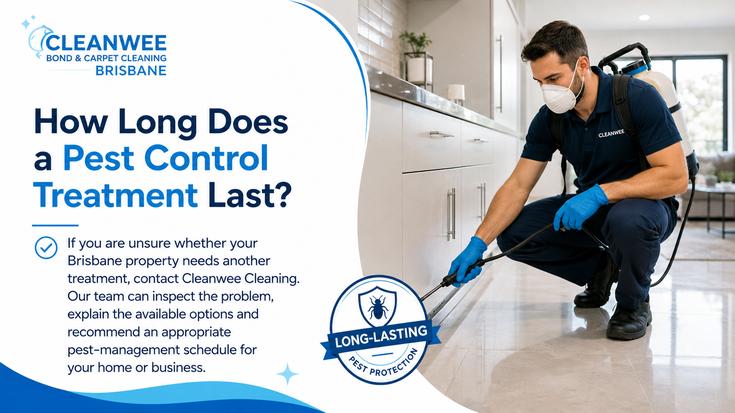
If you are unsure whether your Brisbane property needs another treatment, contact Cleanwee Cleaning. Our team can inspect the problem, explain the available options and recommend an appropriate pest-management schedule for your home or business.